Northamptonshire Health and Care Partnership Final Update

The June 2022 Newsletter can be seen by clicking on this link: Click here to read or download the June 2022 Partnership Update newsletter.

 This edition includes the reflections of Naomi Eisenstadt, Chair designate of the Northamptonshire Integrated Care Board (ICB), as we all get ready for the ICB to formally replace NHS Northamptonshire CCG on the 1st of July 2022.

Elsewhere in this newsletter you can read about:

  • How our Mental Health, Learning Disability and Autism programme is set to achieve formal Collaborative status.
  • How the NHS is looking to Northamptonshire to help develop a national integrated community stroke service model.
  • Highlights from the first two years of the iCAN programme (Ageing Well).
  • Initial work to develop a feeding difficulties strategy for the Children and Young People programme.

ICS Local Area Partnerships Identified

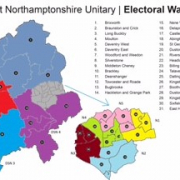
Local Area Partnerships will be a crucial construct around the concept of Placed Based Delivery within the ICS. In West Northamptonshire, the 9 Local Area Partnership Areas have been identified and can be viewed via the pictograph below:


Local Area Partnerships will support household populations of between 30 and 50,000.


Local Area Partnership Boards will sit in each of these 9 Areas and will ultimately be responsible for looking at and delivering services against Population Health Data and the 10 ambitions enshrined in West Northamptonshire’s Live your Best Life.


Membership to these Local Area Partnerships has yet to be agreed.


Watch this space for more information as the ICS journey continues……..

The ICS arrives on the 1st of July 2022

The Integrated Care System arrives in Northamptonshire and elsewhere on the 1st of July 2022.

NAVCA (The National Association for Voluntary and Community Associations) has been working with Lev Pedro Consultants to distil information about the ICS and what this might mean in the future for both individuals and the VCSE sector. Their latest guidance is provided below:

Shall we start with a jargon check… Do we know our ICBs from ICPs and ICSs? 

  • Integrated care system (ICS) is the new arrangement that will underpin the planning and delivery of health and social care. The ICS brings together partners from across the NHS, local government and independent (voluntary and private)  sectors. The ICS is about all of us, not just the NHS!
  • There will be a new NHS integrated care board (ICB) a statutory organisation operating across the system area which will replace clinical commissioning groups (CCGs). This will have a core team at system level and work at place level (together with local stakeholders including districts and borough councils, the VCSE sector and NHS providers).
  • The integrated care partnership (ICP) is a statutory committee that connects all stakeholders in the ICS as equal partners. This is jointly convened by both the NHS ICB and the upper tier local authorities and will involve a wide range of stakeholders. It will set the strategy for the ICS and needs to work in a way that is aligned to local health and wellbeing boards.

What’s Changing in July?

Service providers should not worry that suddenly all their commissioned contracts will be aggregated to system level, and all their local relationships will be lost. This is not the case. There is a big emphasis on ‘place’ in the ICS design guidance. One of the main bits of advice that we’re hearing is that the first year at least will be transitional. For some services, there may indeed be moves to build clinical pathways across the system area, over time, but most day-to-day commissioning will continue at place level for the time being. Transitional arrangements for at least a year will give everyone permission to acknowledge and fix when something isn’t working.

And what do we all need to do to embrace the change? What behaviours are needed to make this a truly equitable partnership between NHS and the VCSE?

Suffolk and Northeast Essex was one of the first systems in the country to become an ICS. At its heart, it is an equal partnership across the NHS, local government and voluntary, community and social enterprise (VCSE) sector, increasingly characterised by:

  • Positive relationships between local health and care leaders
  • Courageous joint action to address problems, and
  • A genuine ‘Can Do’ attitude that enables meaningful partnership and integrated thinking and working at every level.

At its heart lie 7 principles:

Equal means equal:

The NHS England guidance talks a lot about equal relationships. But saying it is easy. How will this be achieved in reality? What are the systemic barriers to achieving this? How can we remove those? It’s not just about seats at tables – it’s real sharing of power. Equal really means:

  • Equal voice and representation
  • Equal influence
  • Equal opportunity
  • Equal access to information
  • Equal support
  • Equal investment
  • Equal expectations.

Tear up the rule book:

Integrated care is a new way of working for the NHS. ICSs are intended to be true partnerships of the NHS, local government, communities and the VCSE sector, focusing on local issues, local needs, and local determinants of health.

“They’re not like anything that’s gone before – they’re a novel construct in a novel world where things are really changing. 

“Take away all of your perspectives, all of the patterns’ people will want to put on to things so we understand them. This isn’t the way this is going to work.” 

Rob Webster, West Yorkshire Health and Care Partnership, May 2022 

True, the NHS has been focused on the new structure lately, but to think that integrated care is just about NHS staff having a new name badge is completely missing the point. Integrated care is about system thinking and working and bringing all stakeholders together in a less competitive and more collaborative way of working.

Relationships matter:

The basis of good partnerships is relationships, and this is even more the case when moving a to a more system based and less transactional model. This is about people FEELING like they are part of a team with shared values, mission and goals, and the tools to make that teamwork translate into successful work. Relationships need investment and nurturing.

Walk the talk:

Who sets the narrative in an ICS? What opportunities are there for VCSE sector leaders not just to listen in to conversations led by the NHS or local government? VCSE sector leaders must be able to bring their issues to the table.

Equal relationships also require ‘adult to adult’ transactions which are open, honest and direct. Working these out together as a partnership is an important aspect of building sustainable relationships. In brief:

  • Keep it simple
  • Respect my time
  • Match my effort
  • Keep your word
  • Always be honest
  • Stay consistent.

Lead and cede:

It’s important to start with the ‘why’, then go on to the ‘how’, and only then the ‘what’. When time is short it’s far too tempting to start with the ‘what’ – in other words a plan or a strategy, before working out why we’re in the room, and what the problem is that we are seeking to fix. Then who should be in that conversation?

Strength lies in diversity:

The VCSE is complex, it’s messy, it’s poorly coordinated. But this is for very good reason. VCSE organisations have grown to meet a need in the community, or to campaign on an issue, or to prevent a tragedy from recurring, or whatever. There’s no master plan. That diversity is what makes it great, makes it agile, and responsive, as we saw during the Covid pandemic. The task is for that diversity to be celebrated and harnessed. The VCSE sector has been challenged to make this happen by forming VCSE alliances, and these are at varying levels of maturity across England. One of the biggest challenges these alliances face is representing the full diversity of community interests and health and care needs. Local infrastructure organisations could be the conduit for this to happen.

The future is in our hands: 

With integrated care there really is an opportunity for us all to do things differently, not for the sake of it, but because it has the potential to really deliver better for our communities. Covid gave us the chance to remove barriers and get things done. Now let’s build on that, let’s “feel the fear and do it anyway”. Let’s be the change.

Notes:

In West Northamptonshire 9 Local Area Partnerships are being formed around the concept of Place. In North Northamptonshire there will be 8. The VCSE now has an opportunity to sit at these tables, but only where the Health Data and the Priorities dictate. Some VCSE organisations are coming to our Network Event on the 30th of June 2022, which is now booked to capacity. If as a VCSE organisation you are not booked to come but want to say something about what you hear or read, then contact VIN at info@voluntaryimpact.org.uk and put ICS in the header line. We will be collating responses from the VCSE (along with our partner Infrastructure Organisations) and placing these before both Directors of Place in the West and the North. Responses should be received by 31st July 2022.

 

West Northamptonshire publishes its Anti-Poverty Strategy

West Northamptonshire Council has strengthened their commitment towards helping people live their best lives by adopting a fresh approach towards tackling poverty and deprivation.

The new Anti-Poverty Strategy sets out how they will work with partners to support people struggling financially, what they will do to stop people falling into poverty and how they will work to influence the Government and other national organisations to get the best deal for the people of West Northants.

It also forms part of a bold new approach to improve social, environmental and economic sustainability, which will help protect communities for future generations.

Members from across the political groups have worked together towards developing the strategy, which has also involved input from the Poverty Truth Commission and people who are currently living through the experience of poverty – important engagement which we will be continuing as the future work is shaped.

The Strategy can be seen here:

Tackling poverty in West Northants | West Northamptonshire Council

Any comments on  the strategy and its contents should be directed to info@voluntaryimpact.org.uk for collation.

The ICS and Your Chance to Comment?

The ICS is now gaining pace and work around Point of Place Delivery is taking shape.

Becoming an ICS in Northamptonshire | Voluntary Impact Northampton

West Northamptonshire Council are working towards 10 ambitions enshrined in the strap line of Live Your Best Life. North Northamptonshire Council will be following suit.

These ambitions can be viewed here:

Live Your Best Life | Voluntary Impact Northampton

Both Councils will be delivering the Place Based Integrated Approach through Local Area Partnerships which will be geographically based. There will be 9 in West Northamptonshire and 8 in North Northamptonshire.

These Partnerships will be the engine rooms for driving change at a local level, based upon Population Health Management Data and the 10 ambitions. Together, these 2 constructs will determine the priorities for each area.

Both Councils now wish to cascade this information to the VCSE through the current Infrastructure Organisations and illicit the views of local Community Organisations. Supporting Information can be found here:

Northamptonshire ICS, North Northants – Place

CYP Transformation Programme 

The Northamptonshire VCSE Assembly

Our ICS  

Mental Health Northants Collaboration  

Response to the Integrated Care Place Board White Paper | Voluntary Impact Northampton

If you have any remarks about how the ICS will develop around a Point of Place, please send them to info@voluntaryimpact.org.uk for collation.

Comments should be received no later than 12 noon on the 30th of June 2022.

Happy at Home: Spotlight on volunteer Janice

Janice has been volunteering for Happy at Home Northampton since May 2021. She is one of our valued telephone befriender volunteers. She chats with two of our service users on a regular basis, providing regular conversation for both of them.

What attracted you to volunteering and why Happy at Home?

As a person with additional needs, I want to give what I can to society! I liked this project because it is something I can do from the comfort of my own home I could call flexibly around my life. Telephoning people means that I do not have to rely on transport and support to be in a different environment.

What was the process like?

I found the process of entry to volunteering at Happy at Home free from the usual barriers I have faced. Although I needed some initial help with the written side of the application I was able to have a telephone interview with a member of staff and the whole process went very smoothly, The focus was on the positives what I can do and what do we need to do to enable me to be a volunteer, this makes a great change as often I’ve experienced barriers and assumptions as they “look” at my disability rather than what I can offer in a positive way!

What do you enjoy about your volunteering role?

I enjoy speaking to people and know that I can do this role completely independently! Hopefully, I can offer support and advice to the people I speak to, based on my life experiences. Speaking to people is always a blessing!

What difference has volunteering made to you and what impact has it had on your life?

Giving is one of the 5 ways to well-being and I feel confident and valued as an individual and I know I can give something back to society.

What impact does your volunteering role have on the people you have contact with?

I hope my volunteering will help the people I call every week and if they are encountering problems they have someone to speak to. I can reassure them that they have been listened to.

Finally, would you recommend this volunteering role to other people?

As a person “labelled” as Deafblind with joint issues I would definitely recommend “happy at Home” to other people given that the telephone befriending role you can do from home and use your own equipment. I use a phone that can boost the volume of the call if needed. I have recommended and given details to members of my church fellowship for their consideration to volunteer. It is a great feeling doing something independently to help and support other people!”

If you would like more information on volunteering as a befriender with Happy at Home please contact us at happyathome@voluntaryimpact.org.uk or call us on 07718 651 631.

Celebrating Refugee Week in Northampton this June

Celebrating Refugee Week is an event presented in Partnership with the West Northamptonshire Councils Diversity Forum and seeks to celebrate the importance of Refugees within a multi-cultural society.

A full programme will be confirmed by June 6th but if any organisations wish to participate in this event, wish to partake of a stall or simply want more information on activities or location please contact Councillor Danielle Stone at daniellevstone@gmail.com

Confirmed attendees include the Department for Works and Pensions, The Red Cross, Northampton Town Council and several local schools and colleges.

Northamptonshire Virtual Funding Fair 2022 booking system now open

https://www.northnorthants.gov.uk/community-safety-and-emergencies/northamptonshire-virtual-funding-fair-2022

Are you a community group who requires funding for a project, new activities and play equipment, building repairs or more?

This is your chance to attend a virtual session to hear presentations from a range of funders who could help you with your projects.

The Northamptonshire Virtual Funding Fair will take place from Tuesday 7 June to Thursday 9 June 2022 exclusively online between 10am and 4pm.

Funders include:

  • Architectural Heritage Fund
  • Augean
  • Bernard Sunley
  • Central Coop
  • Charity Bank (For Social Investment Loans)
  • Comic Relief
  • Co-op Group
  • Heritage Lottery
  • Mick George Community Fund
  • Morrisons Foundation
  • NACRE Rural Support Services
  • North Northamptonshire Council
  • Northamptonshire Community Foundation (NCF)
  • Office of the Police, Fire and Crime Commissioner
  • Sport England
  • Tesco Community Grants
  • The National Lottery Community Fund
  • West Northamptonshire Council

The funders will all be presenting at the event, providing valuable information on how best to apply for grants. There will also be a hints and tips presentation.

Places are limited and you must book to reserve your place on the presentation of your choice

Booking Form Link: https://www.kettering.gov.uk/forms/form/380/en/northamptonshire_virtual_funding_fair_2022%C2%A0


Friday Bulletin

In this weeks bulletin, find out the latest VIN events, Volunteers Week celebrations and funding news.


Live Your Best Life

Live Your Best Life is a strapline for the 10 ambitions which West Northamptonshire Council in conjunction with their Health Counterparts hope to achieve through the Integrated Care System (or ICS) which goes live on the 1st July 2022. North Northamptonshire Council are likely to adopt a similar approach.

The ambitions are set out here:

  • Thriving Childhood
  • Access to the best available education and learning
  • Opportunity to be fit, well and independent
  • Employment that keeps them and their families out of poverty
  • Housing that is affordable, safe, and sustainable in places which are clean and green
  • To feel safe in their homes and when out and about
  • Connected to their families and friends
  • The chance for a fresh start when things go wrong
  • Access to health and social care when they need it
  • To be accepted and valued simply for who they are.

These ambitions link to both the ICS and Population Health Management (PHM) as a way of involving communities and community organisations in the design of services which meet health inequalities in its widest sense. In the West, there will be several (9) Local Area Panels (formerly known as Neighbourhoods) which will meet and work towards these ambitions. The VCSE will be included, although representation will be based upon what the data says around health inequality and who can add most to these ambitions. Watch this space for more information on how this plays out over the coming months.

Note: As the NHS broker for the VCSE Alliances Programme, VIN will have a role to play in brokering this VCSE Representation. For more information contact info@voluntaryimpact.org.uk